 MOW. TIDY. CLEAR.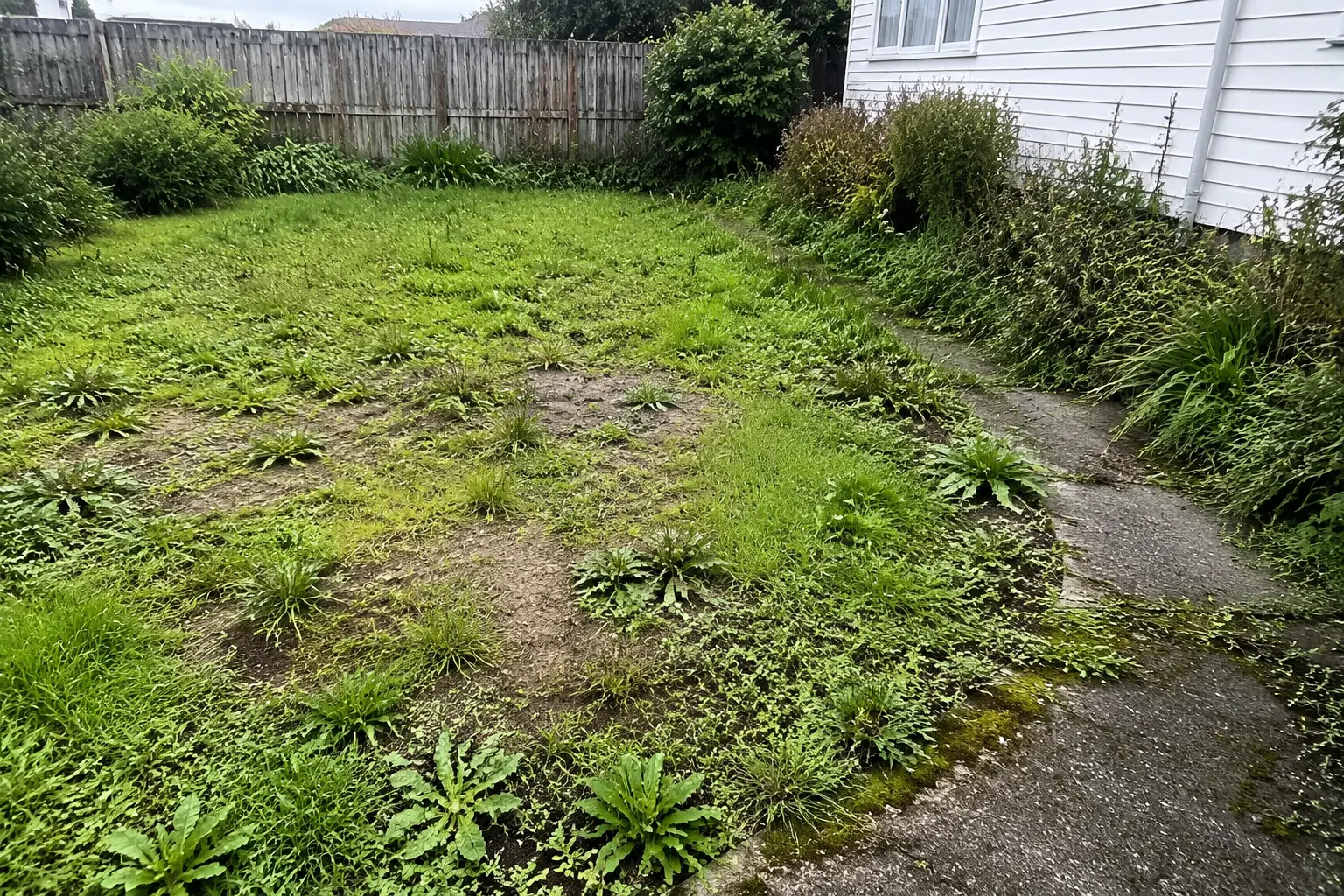
A practical decision process for daisies, clover, broadleaf weeds and unwanted grasses without unnecessary blanket spraying.
Identification changes the solution
A selective broadleaf lawn herbicide may target some flat-leaved weeds while leaving grasses largely unharmed; it will not necessarily control an unwanted grass. Clover may be encouraged by low nitrogen, while hydrocotyle can indicate damp conditions. Treating everything as the same weed wastes product and can damage turf.
Photograph the leaf, growth habit and any flower. Check more than one plant because lawns often contain a mixture. If identification is uncertain, ask a knowledgeable supplier or contractor before applying anything.
Decide whether treatment is necessary
A few hand-removable weeds do not justify blanket spraying. Improving lawn density, mowing at a moderate height and repairing bare soil may reduce future germination. Spot treatment can limit exposure when the product label permits it.
Set a realistic threshold. Some households accept clover and small flowering plants; others need a uniform presentation. The maintenance plan should match the intended result.
Use garden chemicals responsibly
The New Zealand EPA advises reading and following the label, never mixing chemicals, keeping them in original containers and disposing of them as directed. Protect pollinators by avoiding budding or flowering plants, windy conditions and times when bees are foraging.
Confirm personal protective equipment, re-entry time, weather requirements, nearby drains and whether the lawn species tolerates the product. More concentrate is not more effective; it is simply off-label and riskier.
Repair the gap after control
Successful weed control may expose bare soil. Reseed or encourage turf to fill those areas, otherwise new weed seedlings can replace the old ones. The long-term target is dense, well-adapted grass.
Frequently Asked Questions
Should I spray before or after mowing?+
Follow the exact product label. Many foliar products need enough leaf to absorb treatment and a specified period before or after mowing.
Is a natural weedkiller automatically safe?+
No. The EPA warns that natural does not mean non-toxic. Follow the approved label and safety directions for every product.