 MOW. TIDY. CLEAR.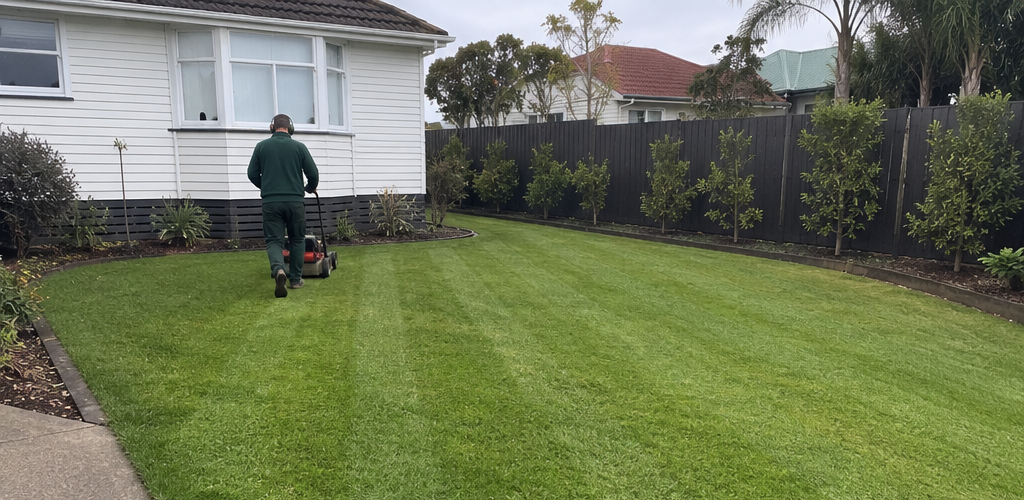
Use autumn soil warmth to repair wear while preparing the lawn for wetter, slower winter conditions.
Review what summer exposed
Autumn reveals irrigation misses, worn paths, compacted play areas and thin turf that weeds may occupy. Mark those patterns before growth disguises them. Check drainage while the first sustained rains are fresh in your memory.
Repair while establishment is still possible
Rake loose material, aerate compacted areas when soil is moist rather than saturated, and overseed with a suitable mix. Keep repairs damp and protect them from leaves and foot traffic. Complete major work early enough for roots to establish before cold conditions.
Feed according to growth and need
Use a lawn fertiliser only when turf is growing and moisture is available, following the label rate and any local restrictions. A soil test is valuable when poor colour persists, because more fertiliser does not correct drainage, shade or an unsuitable pH.
Prepare for wet mowing
Lift leaves regularly, sharpen blades and gradually reduce frequency as growth slows. Avoid creating muddy wheel lines by mowing to a rigid schedule after heavy rain. Clear garden edges and drains before winter leaf fall increases.
Frequently Asked Questions
Can I fertilise and seed together?+
Use only products labelled for establishment and follow the seed and fertiliser instructions. Some general fertilisers are too strong for young seedlings.
Should autumn grass be cut short?+
No. Keep a moderate height and remove only the top portion. A severe cut reduces leaf area going into slower growth.