 MOW. TIDY. CLEAR.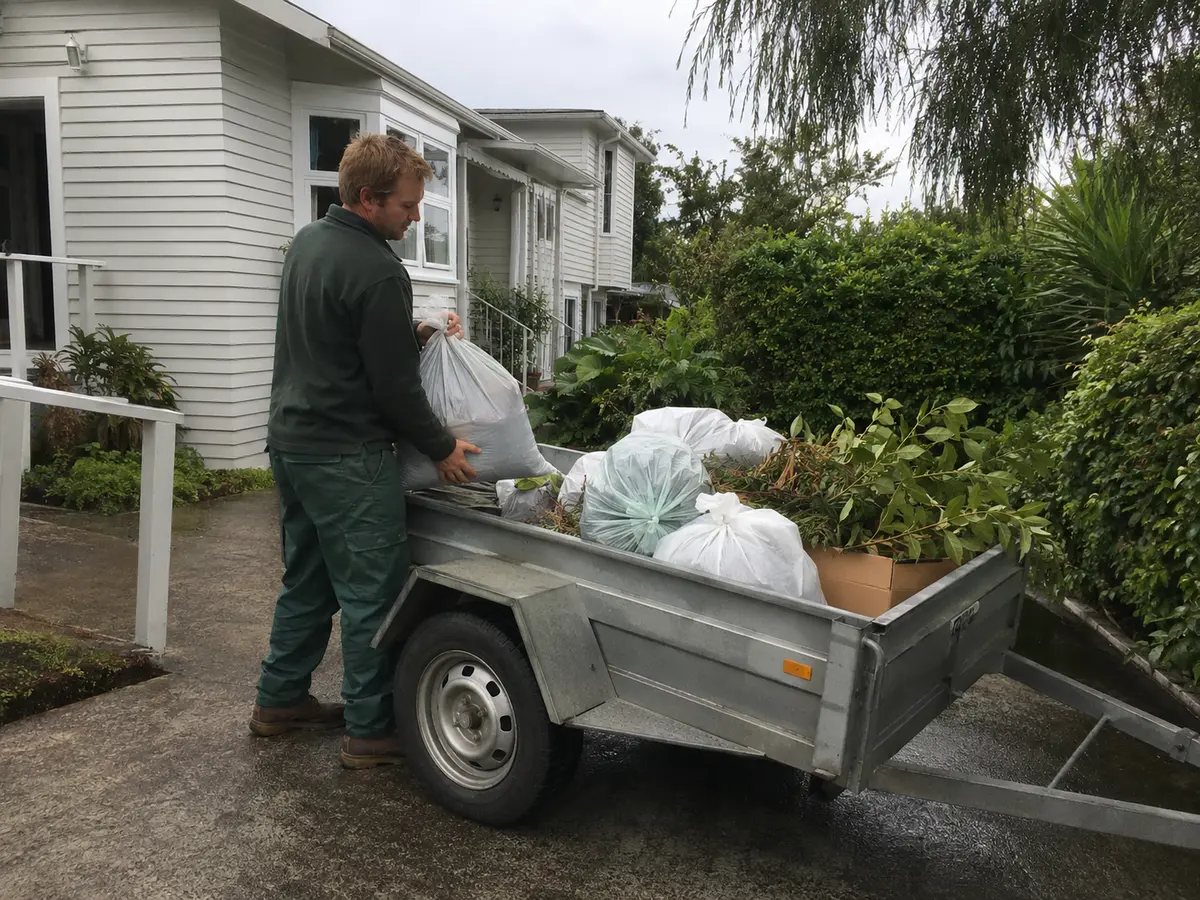
Separate garden material, household rubbish, soil and hazardous products before collection to avoid delays and extra cost.
Green waste should be clean
Typical green-waste streams may accept grass clippings, leaves, hedge trimmings and branches within size limits. Soil, rocks, treated timber, plastic pots, wire and household rubbish can contaminate the load.
Ask the collector or facility what is accepted before piling everything together. Re-sorting a mixed heap on collection day adds time and can make some material unacceptable.
Create more than two categories
Use separate zones for green waste, clean reusable items, general rubbish, metals, electronic waste and hazardous products. Paint, fuel, batteries, gas cylinders, chemicals and asbestos-related material need specific approved pathways and should never be hidden in a general load.
Watch for pest plants and biosecurity rules
Some weeds spread from seeds, roots or cut fragments and should not go through ordinary home compost. Regional pest-plant guidance and temporary controlled areas can restrict moving fruit, compost or garden waste.
Keep suspect material contained and confirm the current disposal route. Do not dump garden waste in reserves or roadside vegetation; it spreads weeds and pests.
Give accurate volume and access information
Photograph each pile with a familiar object for scale, list heavy or awkward items, and describe stairs, distance from parking and gate width. Accurate information produces a more reliable quote and safer collection plan.
Frequently Asked Questions
Can soil go with green waste?+
Often not, or only in limited amounts. Soil changes load weight and processing, so confirm before collection.
Can I put garden chemicals in general rubbish?+
Follow the label and your local hazardous-waste guidance. Keep chemicals in original labelled containers and never mix them.